

Event
The Great North Run
Location
The journey begins in the heart of Newcastle, a city built on coal, ships, and Roman stone. As the Red Arrows scream overhead in their signature diamond formation, you cross the Tyne Bridge. This Grade II listed arch, opened in 1928, is the emotional crescendo of the race. For a runner, the view from the bridge—looking down at the Quayside and the HMS Calliope—is the “I’ve arrived” moment.
As you leave the city and enter Gateshead, the route becomes a corridor of industrial and sporting heritage. You pass the International Stadium, a hallowed ground for British athletics, where the ghosts of world records seem to linger in the air. The history here isn’t just in the bricks and mortar; it’s in the decades of Charity runners who have raised hundreds of millions of pounds on this specific stretch of tarmac.

Landscape & Terrain
The course is a “point-to-point” route, which means you are constantly moving toward the horizon. While many expect a flat city run, the terrain of the Great North Run is famously undulating.
- The Tarmac Ribbon: The first 8 miles are dominated by dual carriageways (the A167 and A184). While the surface is smooth and fast, the “camber” of the road can be a silent killer for the ankles.
- The “John Reid Road” Descent: Around mile 9, the route takes a long, sweeping descent towards South Shields. This is where you can find your speed, but it’s a deceptive gift—go too fast here, and your quads will pay the price on the final climbs.
- The Prince Edward Road “Bumps”: As you enter South Shields, the road begins to roll. These aren’t mountains, but after 10 miles, these short, sharp inclines feel like walls.
The Coastal Finish
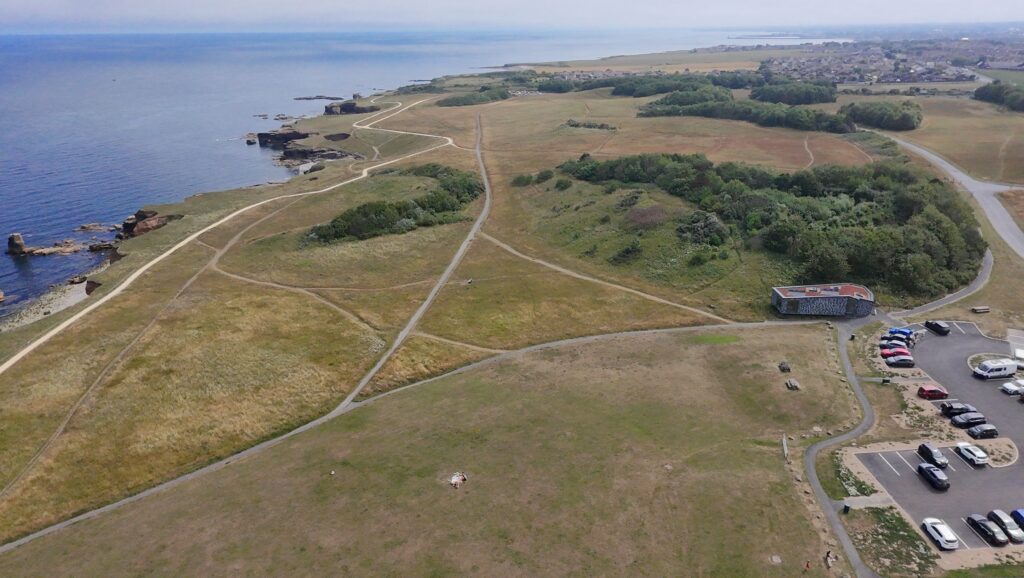
The landscape undergoes a dramatic shift in the final mile. As you turn the corner at Marsden Bay, the industrial grey of the A-roads is replaced by the brilliant blue of the North Sea.
The final stretch along The Leas is one of the most iconic finishes in world sport. You are running on a wide, grassy cliff-top plateau owned by the National Trust. To your left, the sea crashes against the limestone stacks of Marsden Rock; to your right, hundreds of thousands of spectators are screaming your name. The finish line sits near the Gypsies Green Stadium, where the smell of sea salt and the sight of the finish gantry create a sensory overload that masks the pain in your legs.


Elevation Summary
The Great North Run is often mistakenly described as “flat” because it’s a road race, but its profile is actually a series of relentless, rolling undulations. The course features a total ascent of approximately 105m (344ft) and a total descent of 135m (443ft), making it a “net downhill” route.
The Start (Miles 0–2): You begin on a slight downhill from the Central Motorway, but the climb onto the Tyne Bridge and the subsequent rise into Gateshead provides an early wake-up call for the calves.
The Gateshead “Rollers” (Miles 3–8): This is the most taxing section. The Felling Bypass is a long, steady drag of subtle inclines. It’s not steep, but the lack of flat ground prevents you from settling into a consistent rhythm.
The Big Descent (Miles 9–10): After passing the Whitemare Pool interchange, the course offers a significant gift. The John Reid Road is a long, sweeping downhill stretch. This is where most runners clock their fastest mile, but the impact can take a toll on your quads.
The “Prince Edward” Bumps (Miles 11–12): As you enter South Shields, the road “kicks” several times. These short, sharp rises feel much steeper than they are because they hit just as fatigue sets in. This one feels like it goes on forever.
The Coastal Flat (Mile 13–Finish): Once you hit the coast at Marsden, the final mile along The Leas is almost entirely flat (except that little climb from Marsden roundabout), allowing for a sprint finish toward the sea.
The Experience
The defining feature of the Great North Run isn’t the elevation—it’s the crowds. The “Landscape” is effectively a 13-mile wall of sound, characters and a sea of stories.
The “Beer and Oranges”: Local residents line the route with trays of orange slices, ice pops, and famously, the occasional pop up pub on the John read Road offering runners reall ale (in small cups).
The Charity Bus: Near the end of the Gateshead section, the sight of the charity buses and massive cheering squads provides the mental fuel needed to push through the “Wall” at mile 10.
The Great North Run is a “bucket list” event because of its democratic spirit. You’ll see elite world-record holders like Mo Farah or Hellen Obiri sprinting the same tarmac as a person dressed as a giant telephone raising money for a local hospice.
It is a grueling, emotional, and rhythmic journey from the “Z-bend” motorway start to the South Shields seafront. When you finally cross that line and receive your medal, looking out over the sand dunes of Sandhaven Beach, you realize you haven’t just run a race—you’ve become a part of North East folklore.
Leave a Reply