
Welcome to one of the most historically rich and geographically diverse trail runs in the North East of England. This 12-mile loop is more than just a run; it is a journey through the “Land of Oak & Iron,” a landscape shaped by three centuries of heavy industry, aristocratic ambition, and the resilient beauty of nature reclaiming its own.
This route offers everything: challenging climbs, technical descents, fast railway flats, and views that stop you in your tracks. Your journey begins at the Winlaton Mill Heritage Centre. While today it is a relaxing spot for a coffee, in the 18th century, this was the site of Crowley’s Ironworks, once the largest industrial complex in Europe.
Mile 1: The Industrial Ghost – Winlaton Mill & Derwenthaugh Park
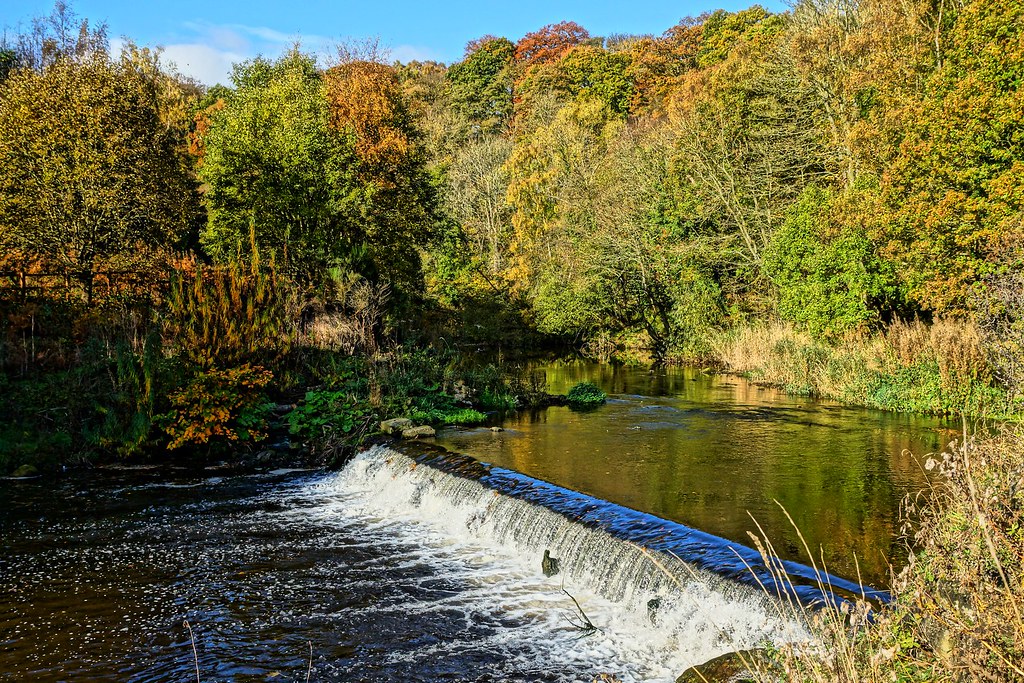
The trail begins on flat, hard-packed gravel paths. You start at roughly 12m above sea level. As you head into Derwenthaugh Park, you are running over the footprint of the Derwenthaugh Coke Works. Until 1986, this area was a landscape of smoke and steel. Now, it is a lush wetland. The first mile is a perfect warm-up, allowing you to settle into your stride as you follow the River Derwent. Look out for the “Land of Oak & Iron” sculptures—artistic nods to the blacksmiths and miners who once called this valley home.
Mile 2: The Ascent – Into the Ancient Canopy
The path begins to tilt upward as you leave the valley floor. The hard packed gravel paths switch to soft forest floor and dirt tracks. A steady climb from 20m to 55m. You break away from the main park paths and begin the climb into Thornley Woods. This is ancient woodland, meaning it has been continuously forested since at least 1600. The air here feels cooler and thicker. This mile is where you’ll likely spot your first Red Kite. These magnificent birds of prey were reintroduced here in 2004; their five-foot wingspans and forked tails are a constant presence above the canopy.
Mile 3: The Railway Connection
After the climb, the trail rewards you with a technical descent that demands focus. Rooty, single-track descent dropping back down to ~50m. You drop out of the woods and emerge at the South West end of the Nine Arches Viaduct. For now, you aren’t crossing it; instead, you join the Derwent Walk, the backbone of the valley’s trail network. This was once the Consett Branch of the North Eastern Railway. Imagine the sound of the coal trains that used to thunder along this very path, carrying the lifeblood of the Northern economy toward the Tyne.
Mile 4: The Spine of the Valley and The Gates of Grandeur
This mile is all about finding your rhythm as you exit the long, straight “flats” of the old railway line, a flat, predictable ballast-turned-trail nd turn to the concrete paths heading into Rowlands Gill. To your left, you’ll catch glimpses of the river below and the camping site. Rowlands Gill was a classic “railway village,” growing rapidly in the late 19th century to serve the local collieries. Passing the old station site, you feel the transition from the industrial valley toward the grand estates. As you cross the road at Rowlands Gill, you enter the Gibside Estate, a National Trust gem. It is hear that you wil need to show your National Trust Membership card, pay to enter Gibside, or skip to mile 8 and begin your journey back along the Derwent Walk.
Immediately upon entering Gibside atthe visitors ebntrance, you take a right turn through the large gate, and begin a steep, heart-pumping climb beneath the Gibside Chapel. The climb takes you beneath the Chape and the Strawberry Fields playpark—a vibrant spot that belies the historical weight of the architecture above you. You’ll follow the sounds of a small stream to your right. The sound of water competing with your heavy breathing creates a rhythmic soundtrack as you head deeper into the forest and begin your journey towards the Stables.
Miles 5: Forest tracks, the Stables and the Secret Pond
Following the slow, steep climb from the entrance to the estate, the trail soon widens and you find the forest road which streaches through the trees towards the stables. Reaching the Stables feels like entering a different era.
The Stables at Gibside were built on a scale that rivaled most country houses of the time, reflecting the Bowes family’s obsession with horse racing. Once past the Stables, the route climbs again. You’ll pass a secluded pond—a quiet, reflective spot—before heading out toward the very edge of the estate. The terrain here becomes more rugged, moving away from the manicured gardens and into the working forest as you climb to the highest point.
Mile 6: The Flow and the Fall
This mile offers a dramatic contrast in pace. Long, flowing downhill forest track followed by a steep, technical descent. After the exertion of the previous miles, the long flowing track allows you to open up your stride. Enjoy the speed while it lasts, because the trail soon turns “technical.” You’ll navigate a steep descent toward the river, where foot placement becomes critical among the roots and loose stones. This is pure trail running—raw, fast, and demanding.
Mile 7: The River’s Edge and the Ice House
A brief climb followed by a riverside skirt, then a steep single-track climb. You are now at the lowest and perhaps most atmospheric part of the estate. The trail skirts along the River Derwent, directly beneath the ruins of the Old House (Gibside Hall). Looking up at the hollowed-out windows of the Jacobean mansion, you get a sense of the “faded grandeur” that defines Gibside. The path then kicks up again—a steep, narrow single-track climb passing the Old Ice House, an 18th-century “refrigerator” dug into the hillside to keep the estate’s delicacies cold through the summer.
Mile 8: The Long Walk to Liberty
You emerge from the woods onto one of the most famous vistas in Northern England, a flat, grand grass and gravel avenue. You join the Long Walk. To your left, in the distance, is the Column to Liberty, topped by a gilded statue. To your right, the path reaches out toward the Gibside Chapel. This mile is visually stunning. As you loop behind the Chapel and pass the café, you leave the estate via a wooden walkway, heading back toward the entrance/exit. You’ve just completed a “greatest hits” tour of Georgian landscaping.


Mile 9 – 11: The Long Return via the Nine Arches
Leaving Gibside, as you head back through Rollandsgill, you rejoin the Derwent Walk as you left it, but this time, you take the long road back along the flat railway trail. Once again, flanked by steep embankments covered in wildflowers.
Along the way, crossing The Nine Arches Viaduct. Built with over 7 million bricks, it offers a bird’s-eye view of the canopy you ran through during Mile 2. This is the ultimate “photo op” moment—the valley opens up beneath you, and the scale of the landscape becomes clear.
The trail streaches out for miles ahead of you, an opportunity to streach out your pace, settle in to a regular stride and enjoy your suroundings, with the river far below you to the left and the woodland covered embankment raising up to your right.
Mile 12: The Final Loop – Return to the Mill
The final mile brings the journey full circle, back along the flat riverside path you started yor journey on. You cut back through the northern edge of Derwenthaugh Park, following the river as it winds back to Winlaton Mill.
As the Heritage Centre comes back into view, you’ve successfully navigated 12 miles of history, from the iron-forges of the 1700s to the majestic ruins of the Bowes family legacy.
Why Run This Route?
This route is a masterclass in variety. It tests your climbing, your technical agility, and your flat-out speed. But more than that, it connects you to the heritage of the North East. Every mile tells a story of transformation—from industry to estate, from ruin to rebirth.
Pro Tip: After your run, the Heritage Centre café at Winlaton Mill serves excellent local cakes—a well-earned reward for conquering the Gibside climbs!
Leave a Reply